


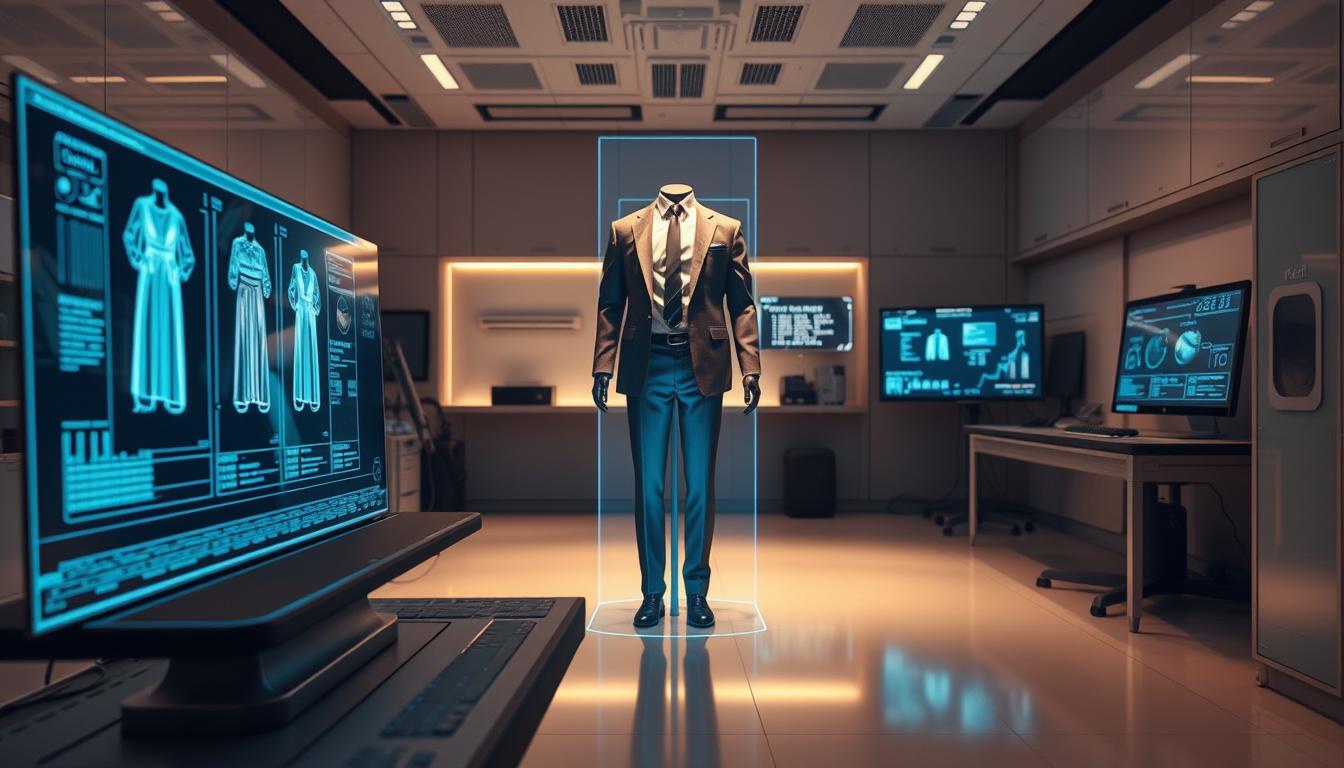
Have you ever wondered how AI-generated content is revolutionizing the fashion industry? With the rise of artificial intelligence in fashion, new technologies are emerging, including AI undressing.
AI undressing is a technology that uses complex algorithms to digitally remove clothing from images. This innovation has sparked both interest and debate. In this article, we will explore how AI undressing works and its implications.
Key Takeaways
- Understanding the basics of AI undressing technology.
- The role of artificial intelligence in generating content.
- Implications of AI undressing in the fashion industry.
- Ethical considerations surrounding AI undressing.
- Future prospects of AI-generated content in fashion.
Understanding AI Undressing Technology
With the advent of AI undressing, the boundaries between reality and digital representation are becoming increasingly blurred. This technology involves using artificial intelligence to generate images or videos of people without clothing, often used in adult content or fashion tech. The implications are vast, ranging from revolutionizing virtual try-on experiences to raising important questions about privacy and data security.
What is AI Undressing?
AI undressing refers to the use of artificial intelligence algorithms to remove clothing from images or videos, creating a digital representation of a person without clothes. This technology is primarily used in two industries: adult content creation and fashion technology. In adult content, it’s used to generate specific types of media, while in fashion, it’s utilized for virtual try-on and personalized fashion recommendations.
The Evolution of AI in Fashion
The integration of AI in fashion has been a gradual process, starting with simple applications like chatbots for customer service and evolving into more complex technologies like AI undressing. The evolution of AI in fashion has been driven by the need for more personalized and immersive shopping experiences. Today, AI is used not only for undressing but also for styling advice, inventory management, and predicting fashion trends.
Key Technologies Behind AI Undressing
The key to AI undressing lies in advanced machine learning algorithms and computer vision. These technologies enable the accurate detection of clothing and the human body, allowing for the precise removal of clothing from digital images or videos. The table below outlines some of the key technologies involved:
| Technology | Description | Application in AI Undressing |
|---|---|---|
| Machine Learning Algorithms | Enable systems to learn from data and improve over time. | Used for detecting clothing and body shapes. |
| Computer Vision | Allows computers to interpret and understand visual information. | Essential for processing images and videos. |
| Deep Learning Models | A subset of machine learning that uses neural networks to analyze data. | Critical for generating realistic images or videos. |
By understanding these technologies, we can better appreciate the complexity and potential of AI undressing. As this technology continues to evolve, we can expect to see new applications and innovations in both the adult content and fashion industries.
Applications of AI Undressing
From virtual try-ons to personalized recommendations, AI undressing is transforming how we interact with fashion. This technology is not limited to a single use case but has a broad spectrum of applications that are revolutionizing the fashion industry.
Virtual Try-On Experiences
One of the most significant applications of AI undressing is in virtual try-on experiences. This allows customers to see how clothing items fit without having to physically try them on. Virtual try-on is particularly beneficial for online shoppers, reducing the likelihood of returns and enhancing the overall shopping experience.
Enhancing E-commerce Platforms
AI undressing can significantly enhance e-commerce platforms by providing a more immersive and interactive shopping experience. By integrating AI undressing technology, online retailers can offer customers a more engaging way to explore products, potentially increasing sales and customer satisfaction.
| E-commerce Enhancement | Benefits |
|---|---|
| Virtual Try-On | Increased customer engagement |
| Personalized Recommendations | Improved customer satisfaction |
| Streamlined Product Exploration | Potential increase in sales |
Personalized Fashion Recommendations
AI undressing technology can also be used to provide personalized fashion recommendations based on a customer’s preferences, body type, and previous purchases. This personalized approach can help customers discover new styles and brands that they may not have considered otherwise.
By leveraging AI undressing for personalized recommendations, retailers can create a more tailored shopping experience, fostering a stronger connection with their customers.
Benefits of AI Undressing
AI undressing technology is transforming the retail landscape by enhancing customer experience, reducing costs, and saving time. This innovative technology offers a multitude of benefits for both retailers and consumers, revolutionizing the way people shop.
Improved Customer Experience
The use of AI undressing significantly enhances the shopping experience by allowing customers to virtually try on clothes. This not only makes shopping more engaging but also reduces the likelihood of returns, as customers can see how garments fit without physically wearing them.
Key benefits for customers include:
- Personalized recommendations based on their preferences and body type.
- The ability to try on multiple outfits virtually, saving time and effort.
- A more immersive shopping experience that combines the convenience of online shopping with the tactile experience of physical stores.
Cost-Effectiveness for Retailers
For retailers, AI undressing offers a cost-effective solution to enhance customer engagement and reduce operational costs. By minimizing the need for physical fitting rooms and reducing return rates, retailers can save significantly.
| Cost Component | Traditional Retail | AI Undressing |
|---|---|---|
| Fitting Room Maintenance | High | Low |
| Return Rates | High | Low |
| Customer Engagement | Moderate | High |
Saving Time for Shoppers
AI undressing saves time for shoppers by allowing them to try on clothes virtually, thus streamlining the shopping process. This is particularly beneficial for busy consumers who value convenience.
The convenience offered by AI undressing is not limited to just virtual try-ons; it also includes personalized styling advice and the ability to browse through a wide range of products from the comfort of their homes.
In conclusion, the benefits of AI undressing are multifaceted, offering improved customer experience, cost-effectiveness for retailers, and significant time savings for shoppers. As this technology continues to evolve, it is poised to revolutionize the retail industry further.
Potential Challenges of AI Undressing
Despite its benefits, AI undressing is not without its challenges. As this technology continues to evolve, it’s crucial to address the potential issues that arise with its implementation.
Privacy Concerns and Data Security
One of the significant challenges associated with AI undressing is the concern over privacy and data security. The use of AI to manipulate images raises questions about consent and the potential for misuse. For instance, there’s a risk that such technology could be used to create deepfakes or other forms of manipulated media that could be harmful or invasive.
“The use of AI in image manipulation is a double-edged sword; while it offers innovative solutions for the fashion industry, it also poses significant risks to individual privacy,” said a technology expert. Ensuring the secure handling of user data is paramount to mitigating these risks.
To address these concerns, developers of AI undressing technology must implement robust data protection measures. This includes complying with regulations such as GDPR and ensuring transparency about how user data is processed. For more information on how AI undressing technology is being developed with security in mind, visit https://vip.undressaitool.com/.
Limitations of Current Technology
Another challenge facing AI undressing is the limitation of current technology. While AI has made significant strides in image processing, there are still instances where the technology may not accurately represent the user’s body type or the fit of clothing. This can lead to disappointment or mistrust among users.
- Inaccurate representations due to poor image quality.
- Limited ability to simulate complex fabrics or clothing designs.
- Potential for bias in AI algorithms if not properly trained on diverse datasets.
To overcome these limitations, ongoing research and development are necessary to improve the accuracy and inclusivity of AI undressing technology. By addressing these challenges, the technology can become more reliable and user-friendly, enhancing the overall shopping experience.
The Role of Machine Learning in AI Undressing
The integration of machine learning into AI undressing is enhancing its accuracy and effectiveness. Machine learning algorithms are being utilized to improve the precision of AI undressing technology, allowing for more realistic and personalized virtual try-on experiences.
Machine learning is pivotal in analyzing vast amounts of data, including images and user preferences, to generate highly accurate virtual representations. This not only improves customer satisfaction but also reduces the need for physical try-ons, thereby streamlining the shopping process.
How Machine Learning Improves Accuracy
Machine learning improves the accuracy of AI undressing in several ways:
- It analyzes patterns in user data to predict preferences.
- It enhances image processing capabilities, allowing for more realistic virtual try-ons.
- It continuously learns from user interactions, adapting to new trends and preferences.
As noted by industry experts, “The future of AI undressing lies in its ability to learn and adapt, providing users with a more personalized experience.”
“The use of machine learning in AI undressing is a game-changer for the fashion industry, enabling retailers to offer highly personalized shopping experiences.”
Case Studies of Successful Implementations
Several retailers have successfully implemented AI undressing technology, leveraging machine learning to enhance customer experience. For instance, a leading online fashion retailer saw a 25% increase in sales after integrating AI undressing with machine learning capabilities.
Another case study involved a fashion brand that used machine learning algorithms to analyze customer data and preferences, resulting in a 30% reduction in return rates due to more accurate size and fit recommendations.
These examples demonstrate the potential of machine learning in AI undressing to transform the retail landscape, offering both retailers and consumers significant benefits.
User Experience with AI Undressing
AI undressing technology is changing the landscape of online shopping by providing users with a more personalized experience. This technology allows consumers to see how clothing fits without having to physically try it on, revolutionizing the way people shop online.
The Process of Virtual Fitting
The process of virtual fitting involves using AI algorithms to simulate how clothing would fit on a user. This is achieved through 3D body scanning and machine learning techniques that predict the fit based on the user’s body type and the garment’s specifications.
Here’s a step-by-step overview of the virtual fitting process:
- Users upload their body measurements or allow the AI system to estimate them through provided images.
- The AI system generates a 3D avatar representing the user.
- Users select clothing items they wish to try on virtually.
- The AI undressing technology superimposes the selected clothing on the user’s 3D avatar, providing a realistic view of how the garment would fit.
Feedback from Users
User feedback is crucial in understanding the effectiveness of AI undressing technology. According to recent studies, users have reported a high level of satisfaction with the virtual try-on experience, citing its convenience and accuracy.
| Aspect | User Feedback | Satisfaction Rate |
|---|---|---|
| Accuracy of Fit | Most users found the virtual fitting to be accurate. | 85% |
| Ease of Use | Users appreciated the simplicity of the virtual try-on process. | 90% |
| Overall Experience | Users reported a positive overall experience with AI undressing. | 88% |
The feedback indicates that AI undressing technology is not only innovative but also user-friendly, making it a valuable tool in the e-commerce sector.
Future Trends in AI Undressing
The future of AI undressing holds significant promise for transforming how we interact with fashion. As technology advances, we can expect to see innovative applications of AI in the fashion industry.
Innovations on the Horizon
One of the most exciting prospects for AI undressing is its potential to enhance virtual try-on experiences. Future developments may include more sophisticated algorithms that can accurately simulate how clothing fits different body types, taking into account various fabrics and styles.
Another area of innovation is the integration of AI undressing with augmented reality (AR) technology. This could enable consumers to see how clothes fit in real-time, without the need for physical try-ons.
Predictions for the Fashion Industry
The impact of AI undressing on the fashion industry is expected to be significant. One prediction is that it will lead to a reduction in returns for online retailers, as customers will have a better understanding of how clothes fit before making a purchase.
Additionally, AI undressing could enable personalized fashion recommendations on a large scale, helping consumers find clothing that fits their style and body type more effectively.
- Enhanced customer experience through personalized recommendations
- Increased efficiency in the shopping process
- Potential for new business models based on AI-driven fashion services
As AI undressing technology continues to evolve, it’s likely to have a profound impact on the fashion industry, changing how businesses operate and how consumers shop.
Ethical Considerations in AI Undressing
As AI undressing technology advances, it’s crucial to consider the ethical implications of its development and use. The integration of AI in fashion, particularly in applications like virtual try-on and personalized recommendations, raises important questions about bias, inclusivity, and privacy.

Addressing Bias in AI Algorithms
One of the significant ethical considerations is the potential for bias in AI algorithms. If the data used to train these algorithms is not diverse, there’s a risk that the AI system may not perform equally well for all users. For instance, if an AI undressing tool is primarily trained on data from one demographic, it may not accurately represent or cater to the needs of users from other demographics.
“Bias in AI can lead to exclusionary outcomes, where certain groups are disadvantaged due to lack of representation in the training data.” Addressing this requires a concerted effort to ensure that the data sets used are diverse and representative.
Ensuring Inclusivity in Fashion Technology
Inclusivity is another critical aspect. AI undressing technology should be designed to be accessible and beneficial to a wide range of users, regardless of their background, size, or ability. This involves not just technical adjustments but also a shift in how fashion brands approach their customer base.
- Designing for diverse body types and needs
- Incorporating feedback from a broad user base
- Ensuring that the technology is usable by people with different abilities
By prioritizing inclusivity, brands can create a more equitable and welcoming shopping experience. As noted by a fashion technology expert,
“Inclusivity in AI undressing is not just a moral imperative but a business opportunity, as it allows brands to tap into a wider market and build stronger customer relationships.”
Ultimately, the development of AI undressing technology must be guided by a commitment to ethical considerations, including addressing bias and ensuring inclusivity. By doing so, the fashion industry can harness the potential of AI to create a more personalized, equitable, and enjoyable shopping experience for all users.
The Impact of AI Undressing on Traditional Retail
Traditional retail is on the cusp of a transformation thanks to AI undressing. This technology is not only changing how consumers interact with fashion products but also altering the retail landscape itself.
Changing the Landscape of Fashion Retail
The integration of AI undressing into retail operations is revolutionizing the way stores function. With the ability to offer virtual try-on experiences, retailers can now provide a more engaging and personalized shopping experience. This shift is likely to influence store layouts, inventory management, and overall business strategies.
Key Changes in Retail:
- Enhanced customer engagement through virtual try-ons
- Shift towards online and omnichannel retailing
- Data-driven inventory management
Adapting to New Consumer Behaviors
Consumers are increasingly expecting a seamless shopping experience across online and offline channels. AI undressing technology helps retailers meet this expectation by providing a bridge between the physical and digital shopping worlds.
The table below outlines some key statistics on how consumer behaviors are shifting in response to AI undressing technology:
| Consumer Behavior | Pre-AI Undressing | Post-AI Undressing |
|---|---|---|
| Virtual Try-On Usage | Low | High |
| Online Shopping Preference | Moderate | High |
| In-Store Experience Expectation | Basic | Personalized |
By understanding and adapting to these changes, retailers can better position themselves for success in a rapidly evolving market.
How to Get Started with AI Undressing
The integration of AI undressing technology is becoming increasingly crucial for retailers aiming to provide personalized shopping experiences. As the retail landscape continues to evolve, adopting AI undressing can significantly enhance customer satisfaction and operational efficiency.
Tips for Retailers Implementing Technology
For retailers looking to implement AI undressing, several key considerations can ensure a smooth and effective integration. First, it’s essential to assess your current technology infrastructure to determine the compatibility of AI undressing solutions. Retailers should also consider the scalability of the technology to accommodate future growth.
- Evaluate the vendor’s expertise and support offerings.
- Consider the level of customization available to meet your specific business needs.
- Assess the data security measures in place to protect customer information.
By carefully evaluating these factors, retailers can make informed decisions that align with their business objectives and customer expectations.
Selecting the Right AI Solutions
Selecting the appropriate AI undressing solution is critical to achieving the desired outcomes. Retailers should look for solutions that offer advanced features such as real-time rendering and personalized recommendations. It’s also crucial to consider the user experience, ensuring that the technology is intuitive and accessible for both customers and staff.
| Feature | Description | Benefit |
|---|---|---|
| Real-time Rendering | Instantaneous visualization of clothing on the customer | Enhanced customer experience |
| Personalized Recommendations | AI-driven suggestions based on customer preferences | Increased sales and customer satisfaction |
By focusing on these key aspects, retailers can effectively implement AI undressing technology that not only meets but exceeds customer expectations.
Comparisons Between AI Undressing and Traditional Methods
Comparing AI undressing to traditional fitting rooms reveals a multitude of benefits and some limitations, shaping the future of retail. As technology advances, understanding these comparisons is crucial for both retailers and consumers.
Advantages Over Traditional Fitting Rooms
AI undressing offers several advantages over traditional fitting rooms. For instance, it saves time by eliminating the need to physically try on clothes. Additionally, AI undressing provides a more personalized experience, as it can suggest garments based on the user’s preferences and body type.
- Reduced time spent in trying on clothes
- Personalized recommendations based on user data
- Enhanced customer experience through virtual try-on
Limitations of Traditional Shopping Experiences
Traditional shopping experiences have several limitations. They can be time-consuming, requiring customers to physically visit stores and try on multiple garments. Moreover, traditional fitting rooms can sometimes fail to provide an accurate fit, leading to returns and exchanges.
| Aspect | Traditional Methods | AI Undressing |
|---|---|---|
| Time Efficiency | Time-consuming, requires physical presence | Saves time, virtual try-on |
| Personalization | Limited personalization, relies on sales associates | Highly personalized, based on user data |
| Accuracy of Fit | Can be inaccurate, leading to returns | More accurate, reduces returns |
In conclusion, while AI undressing has its own set of challenges, its advantages over traditional fitting rooms are significant. As the technology continues to evolve, it is likely to become an integral part of the retail experience.
Conclusion: The Future of AI Undressing
The future of AI undressing is poised to revolutionize the fashion industry, offering a more personalized and immersive shopping experience. As technology continues to evolve, we can expect to see significant advancements in virtual try-on experiences and e-commerce platforms.
Transforming Fashion with AI
AI’s role in fashion is becoming increasingly prominent, with applications extending beyond virtual try-on to include personalized recommendations and enhanced customer experiences. By embracing this change, retailers can stay ahead of the curve and provide a better shopping experience for their customers.
Embracing the Future
As the fashion industry continues to adopt AI undressing technology, it’s essential to address the potential challenges and limitations associated with it. By doing so, we can unlock the full potential of AI undressing and create a more efficient, enjoyable, and inclusive shopping experience.